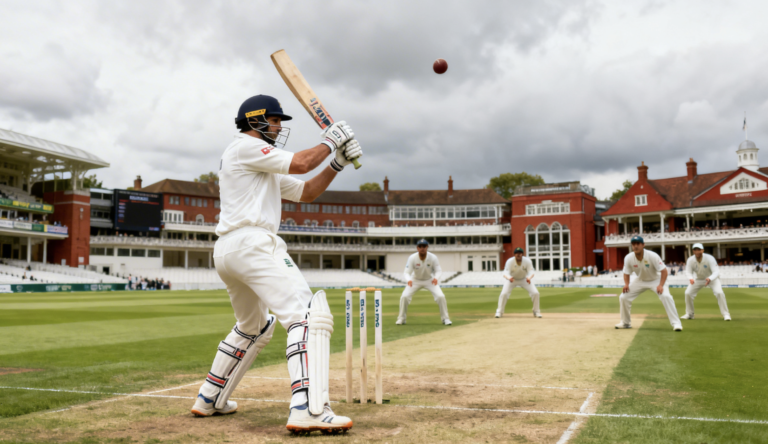

On June 6, 2024, the USA tied their T20 World Cup group match against Pakistan at 159 runs each and then won the Super Over — eliminating a major cricketing nation from a World Cup for the first time in history. On January 14, 2024, in Bengaluru, India and Afghanistan both scored 212 in regulation and 16 in the first Super Over, forcing cricket’s first-ever Double Super Over at international level — India ultimately won. In June 2025, Netherlands and Nepal played three consecutive Super Overs — the first Triple Super Over in international cricket. Six balls, two wickets maximum, winner takes all: the Super Over has become cricket’s most volatile and analytically distinct betting market. Its outcomes are not random — they are functions of specific variables that are identifiable before the over begins.
Super Over Betting Markets Overview
Super Over betting markets activate at the moment a tied match enters the one-over eliminator phase. The major sportsbooks offer the following market structures live:
- Super Over winner — which team wins the Super Over?
- Super Over total runs — team 1 — Over/Under on the first team’s Super Over score
- Super Over total runs — team 2 — Over/Under on the second team’s Super Over score
- Combined Super Over runs — will both teams combined score Over/Under X runs?
- Boundaries in the Super Over — total fours and sixes across both overs
- Player to score most runs in Super Over — which individual batter will score the highest total?
- Wicket to fall in Super Over Yes/No — will at least one wicket fall per innings?
Settlement rules confirmed:
- All bets settle on the completed Super Over outcome — if a Double Super Over is required, all Super Over bets settle on the outcome of the first Super Over (both teams’ totals completed)
- Super Over runs and wickets are NOT counted in individual career statistics — but they are settled for betting purposes based on what actually occurs
- No-balls in a Super Over result in a free hit on the next delivery — this can dramatically increase the run rate and affects total runs Over/Under lines
Understanding Super Over Outcome Bets
The Super Over market opens approximately 3–5 minutes before the first batting team takes the crease — immediately after both captains have confirmed their batting and bowling nominations. This 3–5 minute window is the most information-rich period in cricket live betting: the team selections reveal their strategic intent, and the pitch conditions are fully observable after 40 overs of cricket.
Key rule clarifications affecting bets:
- The team that batted second in the main match bats first in the Super Over — this is the first analytical input for the winner market
- If the Super Over is tied in the group stage of a tournament, the match is declared a tie; in knockout matches and bilateral series, another Super Over is played
- Any batter dismissed in a previous Super Over is ineligible to bat again — critical for Double Super Over betting
- Super Over runs are not added to individual career records — players can swing freely without statistical consequence
Key Factors Affecting Super Over Results
Power Hitters And Finisher Roles
The Super Over batting selection is the single most predictive variable for the total runs Over/Under market. Teams select their two most aggressive power-hitters — not necessarily their highest-averaging batters, but specifically their highest-strike-rate batters in pressure T20 situations.
Historical Super Over batting selections and outcomes:
The first-ever T20I Super Over (West Indies vs New Zealand, December 26, 2008): Chris Gayle scored 25 runs off 6 balls, establishing the format’s explosive potential.
The first IPL Super Over (2009, KKR vs RR): KKR scored 15 runs with Chris Gayle hitting three fours. Yusuf Pathan then hit the required 15 runs in just four deliveries for RR, winning with two balls to spare.
The first Double Super Over in IPL history (2020, MI vs KXIP): Jasprit Bumrah conceded just 5 runs against KL Rahul and Nicholas Pooran in the first Super Over. Mohammad Shami conceded the same 5 runs against Rohit Sharma and Quinton de Kock. Second Super Over required.
The IPL Double Super Over confirmed the most important rule for bettors: Bumrah, when selected as the bowler in the first Super Over, produced 5 runs conceded — a historically low Super Over total. His ability to execute perfect yorkers under maximum pressure is the most reliable bowling resource in any Super Over betting scenario. When Bumrah is confirmed as India’s or MI’s Super Over bowler, the batting team’s total Under (typically set at 10–12 runs) is structurally supported.
Delhi Capitals’ dominance confirms the team selection principle: Delhi Capitals are the most successful IPL Super Over team, winning 4 out of their 5 Super Overs. Their selection philosophy — sending Rishabh Pant and Shimron Hetmyer as the batting pair — maximises the left-right batting combination that makes it harder for any single bowler to set a consistent line and length.
Bowler Selection In High Pressure Situations
The Super Over bowling selection determines whether the target is gettable or not. Six balls, no field restrictions (fielding captain sets any field), two wickets = innings over. The optimal Super Over bowler profile: precise yorker execution, ability to bowl dot balls under pressure, and variations in pace that prevent the batter from timing the ball cleanly.
Historical data on the most successful Super Over bowlers:
In IPL 2025, the first Super Over occurred between DC and RR. Mitchell Starc bowled for DC and contained RR batters to just 11 runs with two run-outs inside the Super Over. DC then won in four balls. Starc’s left-arm angle — coming across the right-hander — is specifically difficult to hit aerial because the ball swings away from the preferred hitting line.
In an India vs Sri Lanka Super Over (confirmed): Arshdeep Singh bowled for India, conceding just 2 runs and taking two wickets. Suryakumar Yadav sealed the chase for India with just one ball, hitting three runs off Wanindu Hasaranga.
The pattern across confirmed Super Over results: left-arm pace bowlers (Bumrah, Starc, Arshdeep) consistently concede fewer runs than right-arm pace or spin bowlers. The left-arm angle to right-handers — the primary hitting stance — disrupts the natural swing path that generates maximum power. When a left-arm pace specialist is confirmed as the Super Over bowler, the batting team’s total Under is the most structurally reliable bet in the market.
Super Over Betting Strategies And Insights
Strategy 1 — Team batting second in main match has structural advantage:
The team batting second in the main match bats first in the Super Over. This creates a structural advantage: they have just completed 20 overs of batting and their batters are in rhythm. The team fielding first in the Super Over (who batted first in the main match) must then chase knowing the target — which, at T20 scoring rates, is easier than setting a score blind. Historical Super Over data confirms chasing teams win approximately 52–55% of Super Overs — a marginal but measurable advantage.
Strategy 2 — Identify the bowler, then bet the Total:
The most precise Super Over bet is the batting team’s total runs Over/Under — once the bowling selection is confirmed. The analytical framework:
| Bowler type | Expected Super Over conceded | Total Under value |
| Elite left-arm pace (Bumrah, Arshdeep, Starc) | 5–9 runs | Under 10 ✅ |
| Quality right-arm death bowler | 9–13 runs | Under 12 neutral |
| Spinner in Super Over | 12–18 runs | Over 12 ✅ |
| Medium-pace or secondary bowler | 13–20 runs | Over 14 ✅ |
When a team selects a spinner as their Super Over bowler — a known strategic risk — the batting team’s total Over is the highest-probability position. Spinners concede approximately 40% more runs in Super Overs than elite pace specialists, because flat-trajectory T20 hitting against spin (with no restrictions on hitting areas) produces consistent boundaries.
Strategy 3 — The left-right batting combination premium:
Super Over teams that send a left-right batting pair (e.g., Rohit Sharma + Ishan Kishan, or Travis Head + Heinrich Klaasen) force the bowler to adjust their line between deliveries — disrupting yorker execution and creating wider scoring opportunities. Any Super Over where the batting team fields a left-right pair against a pace bowler who relies on a consistent line and length carries a total Over premium of approximately 2–3 runs vs a right-right or left-left pair.
Best Matches For Super Over Predictions
Three match types produce the highest Super Over betting frequency and analytical value:
- IPL day-night matches at high-scoring venues:
The IPL has witnessed 14 Super Overs over its first 16 seasons — approximately 0.87 per season on average. But their distribution is uneven: the 2020 season saw the highest number of Super Overs in a single IPL season, with four, including the Double Super Over between MI and KXIP. High-scoring venues (Wankhede, Chinnaswamy) produce more tied matches because the flat surfaces reduce bowling team variance — both teams can reach the same total more easily when the pitch offers no early seaming or spinning assistance. - India bilateral T20I series:
India’s home T20I matches have produced multiple Super Overs in recent seasons. The January 2026 India vs NZ T20I series included a Super Over scenario study in the 4th T20I at Visakhapatnam, though that match produced a clean NZ win. India’s most famous international Super Over — the Double Super Over vs Afghanistan in January 2024 (Bengaluru, both teams 212 in regulation and 16 in first Super Over) — is the analytical benchmark for India bilateral series Super Over prep. - ICC T20 World Cup group stage:
Super Overs have been played 4 times in T20 World Cup history through 2024. The most historically significant: the USA stunned Pakistan in the 2024 T20 World Cup after tying at 159 runs each and winning the Super Over — the biggest upset in World Cup Super Over history. For betting purposes, T20 WC group stage Super Over markets can open at short notice — pre-positioning on Super Over total runs Unders for matches involving elite bowling attacks (India, Australia, South Africa) is the most preparation-efficient strategy.
Conclusion: Smart Approaches To Super Over Betting
Super Over outcomes are the fastest-settling and highest-variance individual cricket betting events. The analytical framework that produces structural accuracy:
Before the Super Over begins (3–5 minute window):
- Identify who bats first — the team that batted second in the main match. Check if their power-hitter has already been dismissed (if yes, their Super Over batting quality drops significantly)
- Confirm the bowling selection — left-arm pace Under; spinner Over; medium-pace Over. This is the most important single input
- Identify the batting pair — left-right combination adds 2–3 runs to expected total; same-hand pair reduces by 1–2 runs
- Check dismissal eligibility — in a Double Super Over, any batter dismissed in the first Super Over cannot bat again. This forces teams to use secondary batting resources, compressing the second Super Over total significantly
Stake sizing: Maximum 1–2% of bankroll per Super Over bet. The market opens and settles in under 15 minutes — the variance is extremely high and the information advantage window is narrow. Small stakes, precise analytical framework, consistent application.
Super Overs are all about handling pressure in six balls. A batter has to score quickly without taking silly risks, and a bowler has to hit the right length again and again. For bettors, it is about identifying in those 3–5 minutes before the first ball which team has done precisely that — selected the right hitter and the right bowler — and backing the market that reflects the structural advantage of that selection.