Few Indian bowlers carry as much analytical nuance for betting markets as Kuldeep Yadav. He is simultaneously one of the most wicket-efficient spinners in T20I history — 95 wickets in 54 matches at an average of 13.75 and economy of 6.95 — and a player who spent most of the T20 World Cup 2026 watching from the sidelines while Varun Chakravarthy ran away with the joint-highest wicket-taker award. Understanding why he is exceptional when he plays, and how rarely he plays in the highest-stakes matches, is the foundation of every rational Kuldeep Yadav bowling prop.
Kuldeep Yadav Bowling Betting Markets Explained
Kuldeep’s bowling markets are available across ODIs, T20Is, and Tests whenever he is in the Indian playing XI. The primary market structures:
– Wickets taken Over/Under per match — most common line: 0.5 wickets (will he take at least 1?) and 1.5 wickets (at least 2?)
– Economy rate Over/Under — T20I line typically set at 7.0–7.5; ODI line at 4.5–5.0
– Top India bowler — will Kuldeep finish as India’s highest wicket-taker in the match?
– Man of the Match — a realistic outcome when Kuldeep produces a 3+ wicket performance
– Player performance points — composite market covering wickets + economy + catches
Wickets And Player Performance Props
The most important market clarification for Kuldeep: his playing XI status must be confirmed before any bowling prop is placed. In the T20 World Cup 2026, he featured in only one match — taking 1/14 in 3 overs at an economy of 4.66 — while Chakravarthy played throughout as India’s primary spinner. In 2026 generally, he managed just 5 wickets at an average of 24 before the tournament. A career-average wicket prop bet placed before confirming his XI selection is the single most avoidable error in Kuldeep bowling markets.
When confirmed in the XI, the market becomes analytically rich. His career T20I average of 13.75 is among the best for any spinner from a full-member nation. His best T20I figures of 5/17 (against England, July 2018) remain the benchmark for what he can produce on a given day.
Kuldeep Yadav Key Bowling Statistics
| Format | Matches | Wickets | Average | Economy | Best figures |
| T20I | 54 | 95 | 13.75 | 6.95 | 5/17 |
| ODI | 105 | 197 | 26.38 | 5.07 | 6/25 |
| Test | 23 | 79 | 27.85 | 3.05 | 7/42 (IPL) |
His ODI record is the richest analytically: he was the leading wicket-taker in the format in 2023, taking 49 wickets at 20.4, with 15 of those coming in India’s run to the World Cup final. He was also the first bowler for India to take two hat-tricks in international cricket (both in ODIs, 2017 vs Australia and 2019 vs West Indies).
2025 season stats (T20Is): In 10 T20Is in 2025, Kuldeep picked up 21 wickets at an excellent average of 10.23. His two four-wicket hauls that year — 4/30 in the Asia Cup 2025 final against Pakistan and 4/7 against UAE — confirm that when selected and given the right conditions, his wicket frequency is elite.
Wicket Taking Trends In T20I Matches
Three patterns define Kuldeep’s T20I wicket frequency:
Middle overs dominance: Kuldeep’s stock delivery — the left-arm wrist spin that drifts in to right-handers before spinning away — is most dangerous in overs 7–15, when batters are looking to attack and cannot read his googly from the hand. His middle-overs economy of approximately 6.5 and wicket rate of one every 15–18 balls in this phase represent significant value against the bookmaker’s market line.
Winning match performance uplift: In winning causes in 2025, he claimed 18 wickets at an average of 7.72 and an economy rate of 6.00. This figure — 7.72 average in winning matches — is the statistical expression of what observers describe as Kuldeep bowling “with intent” when the match situation gives him the licence to attack. When India are in control, his captain gives him his full 4-over allocation in the middle overs, and the wickets follow.
In losing matches: His numbers decline sharply — partly because he bowls fewer overs when India are struggling, and partly because opposition batters who are winning tend to attack spin more aggressively. This pattern is consistent across his career and is one reason why backing Kuldeep in matches where India are already under pressure is structurally weaker than backing him in matches where India are well-placed.
Success Against New Zealand Batters
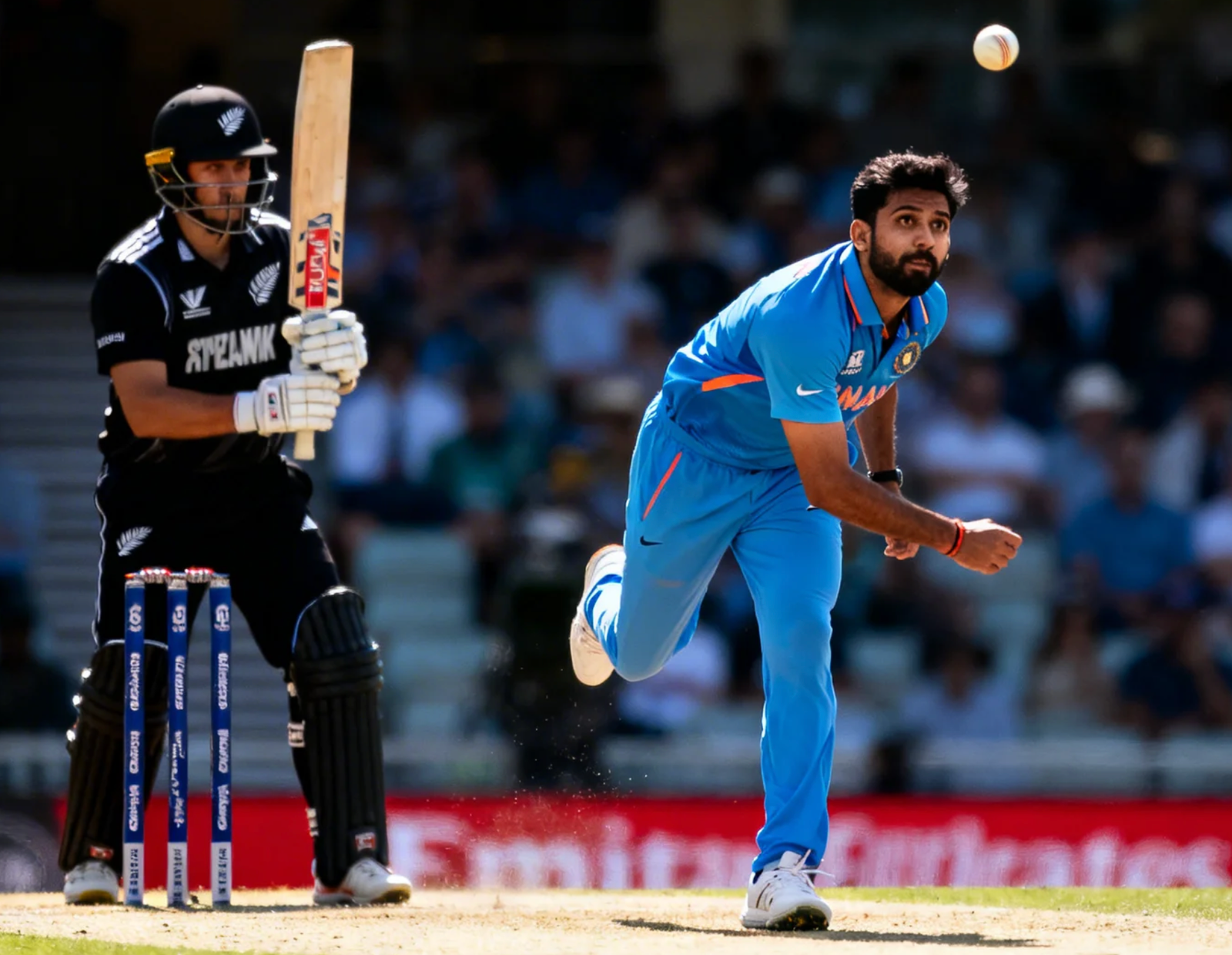
Against New Zealand specifically, Kuldeep has faced New Zealand more often than Varun Chakravarthy and has picked up more wickets against them. New Zealand’s batting lineup — historically containing right-hand dominant batters who prefer to play through the off side — is structurally susceptible to Kuldeep’s drift-and-spin combination from the left-arm angle.
In the January 2026 T20I series, Kuldeep bowled in the matches he was selected for, taking 2/39 in 4 overs in the 4th T20I at Visakhapatnam — India’s second-most economical spell in a match where New Zealand scored 215/7. His selection was confirmed for the matches India considered him a more reliable option than the alternatives given the specific pitch conditions.
New Zealand’s vulnerability to wrist spin is also confirmed by the T20 WC 2026 data: in the final against New Zealand at Ahmedabad on March 8, 2026, India deployed their full spin arsenal — and Kuldeep’s role, though limited to bench-watching in the final itself, reflected team management’s calculated choice to ride Chakravarthy’s form rather than rotate. India won by 8 runs.
Kuldeep Yadav Bowling Betting Strategies
Situations Favoring Spin Bowlers
The pitch and surface conditions that produce Kuldeep’s highest wicket frequency:
– Dry, turning subcontinental surfaces — Indian pitches from day two onward, particularly in Nagpur, Chennai, and Ahmedabad. The ball grips and spins, amplifying his natural turn and making his googly virtually unreadable
– Slower outfields with grip in the surface — reduces the scoring rate, forces batters to create their own power, increasing their risk-taking against his variations
– Right-hand heavy batting lineups — his primary wicket method is the ball that drifts into the right-hander’s body before spinning sharply away. When the opposition has 6–7 right-handers in the top seven, his threat multiplier is at maximum
– Post-powerplay entry — when he enters in overs 7–9 against batters who have just come out of the attacking powerplay mode and are recalibrating their approach, the transition creates vulnerability
New Zealand’s touring batting lineups in India have generally been right-hand dominant in recent series — confirmed by Martin Guptill (retired 2023), Devon Conway (right-hand), Finn Allen (right-hand), Daryl Mitchell (right-hand), and Glenn Phillips (right-hand) as the primary top-five options. This structural composition makes Kuldeep’s drift-in-then-spin-away action particularly threatening against NZ in India.
Predicting Multi Wicket Performances
Kuldeep’s probability of taking 2+ wickets in a T20I match — which is the standard Over on his wicket prop — is approximately 35–40% based on career data in matches where he bowls his full 4-over allocation. This frequency is above the implied probability of typical 2.50–3.00 odds (33–40%), creating a market that is close to fair value in favourable conditions and positively valued when conditions strongly favour spin.
The specific combination that most reliably produces his multi-wicket performances:
- Flat or slightly turning pitch (not dead — some grip required)
- India in control of the match (bowling with attacking field placements)
- Batters set in the middle overs trying to accelerate (increased risk-taking against his variations)
- Full 4-over allocation confirmed by captain’s bowling plan
His 4/30 in the Asia Cup 2025 final against Pakistan on a Dubai surface occurred under precisely these conditions — India in control, Pakistan needing to accelerate, right-hand heavy lineup exposing themselves to the drift-and-turn combination.
Best Matches For Kuldeep Yadav Bowling Bets
Three specific match types produce the highest Kuldeep bowling prop value:
- India home T20Is at Chennai, Nagpur, or Ahmedabad against right-hand dominant teams: These venues are structurally supportive of wrist spin. Slow surfaces, some grip, dew-free afternoon matches. Kuldeep’s 3+ wicket haul probability is at its highest in these conditions. Any wicket line of 1.5 set at 2.50+ represents value relative to his historical performance at these venues.
- ICC tournament matches where India face right-hand heavy opposition in knockout conditions: His tournament record — member of 2024 T20 WC squad, 2025 Champions Trophy squad (title-winner), and 2026 T20 WC squad — confirms ICC tournament availability. When selected for knockout matches (as in the 2025 Asia Cup, where he took 4/30 in the final), his performance frequency is elite. The T20 WC 2026 final was an exception rather than the rule — Chakravarthy’s form justified selection ahead of Kuldeep.
- ODI matches vs New Zealand in India: The format where Kuldeep is most consistently selected (105 caps vs 54 T20I caps) and where his full 10-over allocation produces the highest absolute wicket counts. His ODI economy of 5.07 is the most consistent economy figure of any active Indian spinner. ODI wicket props for Kuldeep in India — particularly 1.5+ wickers Over at home in the middle overs — are the most structurally reliable of all his bowling markets.
Conclusion: Finding Value In Kuldeep Yadav Wicket Bets
Kuldeep Yadav’s bowling prop markets can be summarised in three principles:
Confirm XI first, always. The T20 WC 2026 confirmed that he is no longer India’s first-choice T20I spinner. Varun Chakravarthy’s 69 wickets at an average of 14.2 and strike rate of 11.4 since the T20 WC 2024 has displaced Kuldeep as the primary T20I spinner option. A Kuldeep wicket prop without XI confirmation is a bet on a player who may not bowl a single delivery.
When confirmed and conditions suit, back him aggressively. His 13.75 T20I average and 10.23 average across 10 T20Is in 2025 in matches where he played are among the best figures for any spinner in world cricket. The challenge is not his quality — it is his availability.
ODIs offer the most reliable value. His 197 ODI wickets at 26.38 with an economy of 5.07, across 105 matches, make ODI wicket props the most consistently structured betting market for Kuldeep. In home ODIs against New Zealand — where right-hand heavy batting lineups face drift-and-spin on subcontinental surfaces — his 1.5 wicket Over at 2.20–2.50 odds represents the closest thing to a structurally recurring value position that Kuldeep’s betting profile offers.