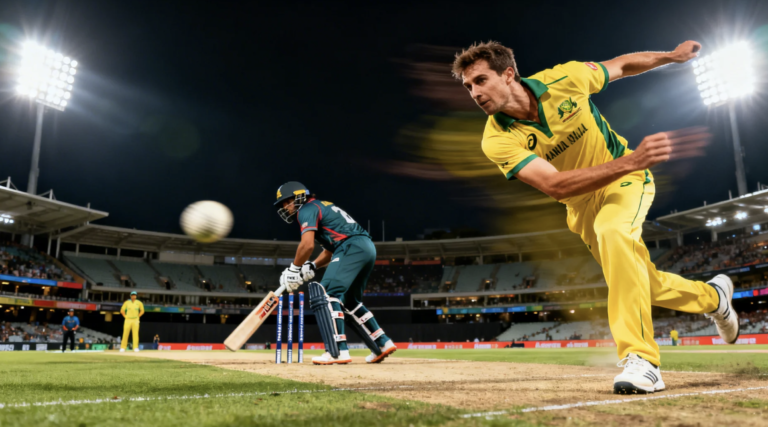
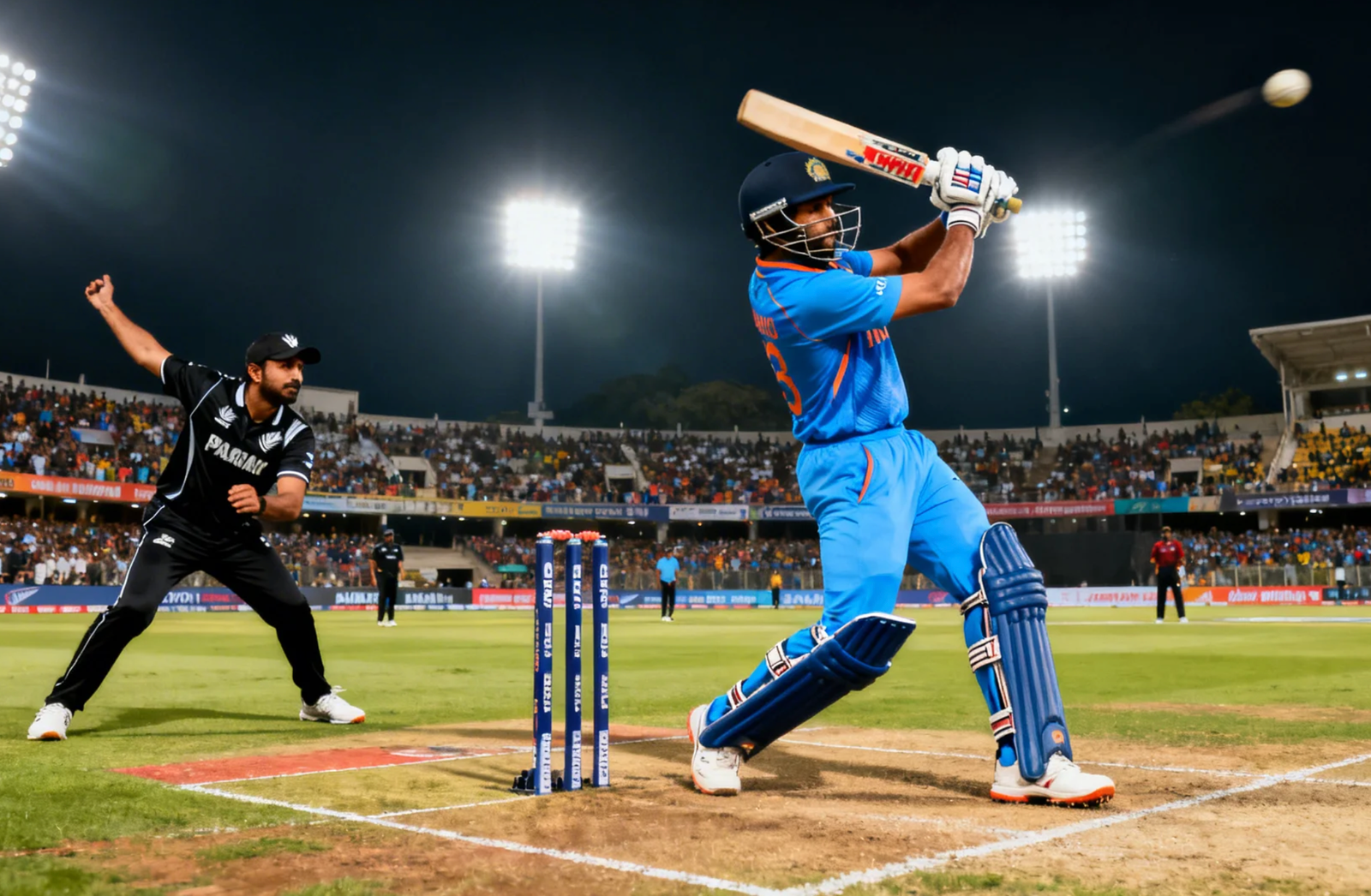
New Zealand walked into Dr. Y.S. Rajasekhara Reddy ACA-VDCA Cricket Stadium on January 28, 2026, already 3-0 down in a five-match series, their World Cup preparations in tatters. What they produced that evening in Visakhapatnam was their most complete T20I performance of the tour — a disciplined 215/7 with the bat, anchored by Tim Seifert’s 62 off 36 and Devon Conway’s 44 off 23, followed by a bowling effort that dismantled India for 165 in 18.4 overs. New Zealand won by 50 runs. It was their first win of the series — and, notably, one of the most instructive cricket evenings for bettors tracking this tour’s performance metrics.
India Vs New Zealand 4th T20I Match Preview
The context entering the match was stark. India had won the first three T20Is — including an 8-wicket demolition in Guwahati where they chased down 153 in just 10 overs — and had already sealed the series. Suryakumar Yadav’s side was unbeaten in their last five T20Is. New Zealand, meanwhile, had been reinforced mid-series: James Neesham and Lockie Ferguson had joined the squad, while Tim Robinson and Kristian Clarke — not part of the World Cup plans — were released.
The Visakhapatnam surface is batting-friendly with good bounce early, a fast outfield, and the capacity to assist spinners as the match progresses. The last T20I played here, in November 2023, saw India chase down 209 against Australia in the final over. Another high-scoring contest was expected.
India had one significant personnel question heading in: Sanju Samson’s form. The wicketkeeper-batter had scored 10, 6, and 0 in the first three T20Is, while Ishan Kishan — who had replaced the injured Tilak Varma at No. 3 — struck 76 off 32 balls in the second T20I and 28 off 13 in the third. The debate over the XI had real consequences for India’s World Cup selection conversation.
For New Zealand, the focus was on Ferguson’s return and whether the full-strength bowling attack could produce a result that — while meaningless for the series — mattered enormously for T20 World Cup confidence.
Key Storylines Before The Visakhapatnam Clash
Three narratives dominated pre-match analysis:
– Suryakumar Yadav’s 3,000-run milestone: He needed 41 runs to become only the third India batter after Rohit Sharma (4,231) and Virat Kohli (4,188) to reach 3,000 T20I runs. He achieved it during the match — scoring his 3,000th run in T20Is, also becoming the fastest player by balls faced to reach the landmark.
– Ish Sodhi’s wicket record chase: Sodhi entered the match on 160 T20I wickets, five away from overtaking Tim Southee as New Zealand’s all-time leading T20I wicket-taker. Only Rashid Khan (187) had taken more T20I wickets overall at the time.
– Samson vs Kishan: With Tilak Varma’s injury extending beyond the 4th T20I, both had consecutive opportunities to press their World Cup case. The match became a decisive data point in that selection argument.
India Vs NZ Head To Head Trends In T20I Matches
India vs New Zealand T20Is have historically favoured the home team overwhelmingly — India’s record in T20Is at home venues through January 2026 is among the strongest of any team in world cricket. The Visakhapatnam match was India’s 100th T20I on home soil, a landmark that underlined the depth of India’s home advantage data set.
Previous Meetings And Scoring Patterns
The first four T20Is of this 2026 series produced a clear scoring pattern:
| Match | Venue | First innings | Result |
| 1st T20I | Nagpur | NZ 238/6 | India highest T20I vs NZ |
| 2nd T20I | Raipur | NZ 209 | India chased in 15.2 overs — fastest 200+ chase in T20Is |
| 3rd T20I | Guwahati | NZ 153/9 | India 155/2 in 10 overs |
| 4th T20I | Visakhapatnam | NZ 215/7 | NZ won by 50 runs |
The first T20I was also India’s highest-ever T20I score against New Zealand. The second — India’s joint-highest successful run chase in T20Is, also the fastest 200+ run chase in T20I history. The third — India’s most dominant powerplay-to-finish performance of the series. Entering the 4th T20I, this was a series defined by flat surfaces, explosive batting, and a significant gulf in team quality that the first three results had established conclusively.
The one trend the series had not yet produced: a New Zealand win. That changed in Visakhapatnam.
Key Players To Watch In The 4th T20I
Abhishek Sharma (India, opener): Since the start of 2025, he had scored 1,011 runs in T20Is at an average of 45.95 and a strike rate of 202.20, crossing 50 eight times in 24 innings — with his slowest half-century coming off 25 balls. In the 3rd T20I, he had hit 68 off just 20 balls including a 14-ball fifty. In the 4th T20I, his wicket was identified by New Zealand as the key priority — Matt Henry confirmed post-match: “Abhishek’s wicket was huge for us. He’s shown how dangerous a player he is.” Devon Conway took a seriously good catch to remove him early, and New Zealand’s discipline in executing that plan was the cornerstone of their bowling performance.
Tim Seifert (New Zealand, wicketkeeper-batter): Named Player of the Match for his 62 off 36 balls. The ESPNcricinfo MVP for the match was Mitchell Santner with 75.09 points. Seifert’s innings gave New Zealand the platform from which their total of 215/7 was built. His combination with Devon Conway (44 off 23) in the powerplay phase set a tempo that India never matched in their chase.
Shivam Dube (India): In what became a consolation performance, Dube struck India’s third-fastest half-century in T20Is — a 15-ball fifty — as India tried to reduce the margin of defeat in the final overs. His cameo was the highlight of an otherwise muted Indian batting display.
Arshdeep Singh (India, bowling): Finished with 2/33 in 4 overs — India’s most economical front-line bowler in the match. Kuldeep Yadav also took 2/39 in 4 overs. But the combined economy was insufficient to restrict New Zealand below 215.
Mitchell Santner (New Zealand, captain/spinner): His bowling figures and his leadership of the New Zealand spell — maintaining pressure through the middle overs and then finishing Bumrah off with the ball — earned him the ESPNcricinfo MVP despite Seifert’s batting POTM award.
India Vs NZ Betting Angles For The Match
Pre-match, the betting markets had India as heavy favourites — justified given their 3-0 series lead, home conditions, and Visakhapatnam’s flat surface. Several performance indicators were structurally underappreciated by the market:
New Zealand’s reinforced bowling attack: The return of Lockie Ferguson — one of the fastest bowlers in T20 cricket — alongside Matt Henry and Jacob Duffy gave New Zealand a genuine new-ball threat that had been absent in the first three T20Is. The previous three T20Is had been played with a depleted NZ bowling unit; bettors who identified the Ferguson addition as a material change to New Zealand’s bowling quality had a structural argument for NZ value.
India’s series-won complacency factor: Suryakumar Yadav confirmed post-match: “We purposely played six batters. Wanted to have five bowlers and challenge ourselves. We wanted to play the players who were part of the World Cup squad, otherwise would have played other players.” This team selection philosophy — rotation and experimentation rather than maximum-strength XI — was a publicly available signal before the match that India’s batting depth would be tested differently.
Sanju Samson’s form entry point: Samson’s scores of 10, 6, and 0 in the series entering the 4th T20I represented historically low output for a batter of his quality. The mean reversion argument — he is due a big score — is a common but unreliable betting framework. More precise was the question of whether India’s management would change his position or role after three consecutive low scores. They didn’t — and Samson continued to struggle.
Ishan Kishan’s century: A landmark was also set in this match — Ishan Kishan scored his 1,000th run and maiden century in T20Is during this match, while Arshdeep Singh took his first five-wicket haul in T20Is. These individual milestones, while meaningful for futures markets, don’t alter the match outcome.
Conclusion: Final Thoughts On The 4th T20I
New Zealand’s 50-run win in Visakhapatnam was the most analytically interesting result of the series precisely because it was the only one that challenged the dominant narrative. India had been dominant across 60 overs of T20 cricket, and New Zealand found their answer in one evening — disciplined batting (215/7), an early critical wicket (Abhishek Sharma), and sustained bowling pressure that India’s experimental lineup couldn’t overcome.
For bettors, the match confirmed several principles that apply across T20 betting markets:
– Squad reinforcement is a material market signal. Ferguson’s return gave New Zealand a weapon absent in the first three T20Is. Bettors who tracked squad changes — rather than simply extrapolating the 3-0 series form — had the most accurate pre-match picture.
– Series-sealed complacency is a measurable India factor. Suryakumar’s post-match comments confirmed the experimental lineup intent. When a heavily favoured team has already won the series and publicly signals rotation, their performance ceiling in that specific match is lower than their overall form suggests.
– Venue history on its own is insufficient. Visakhapatnam had produced a 209 chase in the same series. But match context — who is bowling, who is batting, what is the selection intent — overrides venue averages as a primary indicator.
Suryakumar Yadav did reach his 3,000 T20I runs milestone during the match, becoming the fastest player by balls faced to the landmark. It was the one unambiguous positive from India’s evening in Vizag. The series decider at Thiruvananthapuram on January 31 followed — with New Zealand carrying genuine momentum for the first time in the tour.