
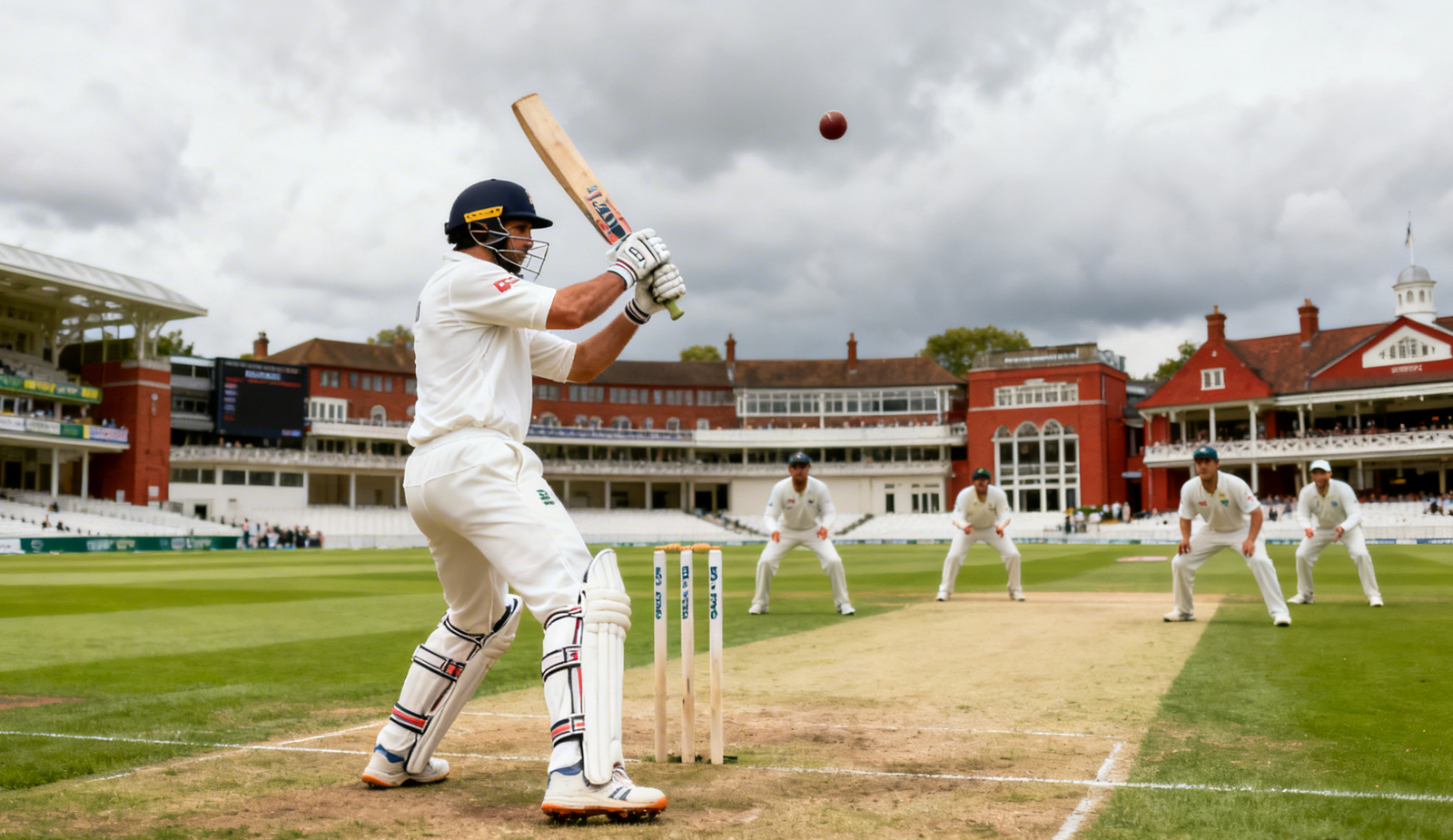
The intersection of historic tradition and modern tactical analysis makes a Test match at Lord’s one of the most complex scenarios for any cricket enthusiast. When India faces England at the “Home of Cricket,” the game often transcends simple skill battles, becoming a contest against the elements, the unique geography of the ground, and the psychological pressure of a fourth-innings chase.
India Vs England Lords Test Match Overview
A Test series between India and England is characterized by contrasting philosophies. India often brings a blend of high-quality spin and aggressive, technically sound top-order batting. England, particularly in the current era, emphasizes a proactive, high-tempo approach that seeks to dictate terms to the opposition.
At Lord’s, the tactical blueprint changes. The pitch often provides early assistance to seamers, and the atmosphere can shift rapidly. For a run chase to be successful, the batting side must not only manage the scoreboard but also navigate the specific technical challenges presented by the Lord’s outfield and the legendary slope. Understanding this dynamic is the first step in analyzing how a chase might unfold.
Key Factors Affecting Run Chase At Lords
A run chase in Test cricket is rarely a linear process. At Lord’s, several variables can cause a target to feel significantly larger or smaller than the number suggests.
- The Lord’s Slope: The ground tilts from the north end to the south end. This affects how much a bowler can “nip” the ball off the seam. A batsman might find the ball swinging more than expected when facing a bowler moving from the steeper side of the slope.
- Session Timing: Most chases in Test cricket are won or lost in specific sessions. The final session of Day 5 is often characterized by extreme fatigue for bowlers and extreme tension for batsmen.
- The Quality of the Spinners: As the match progresses, the cracks in the pitch widen. If India’s spinners can exploit these, the chase becomes a battle of footwork rather than just hand-eye coordination.
Run Chase Conditions In Test Cricket At Lords
Weather and light play a disproportionate role at this venue. Unlike many modern stadiums with roofed stands, Lord’s remains highly susceptible to English weather patterns.
| Condition | Impact on Batsmen | Impact on Bowlers |
| Overcast Skies | Increased difficulty in judging swing/seam | Enhanced ability to move the ball laterally |
| Bright Sunshine | Easier visibility and harder ball bounce | Harder to maintain swing; flatter pitch |
| Late Afternoon Humidity | Potential for “heavy” air affecting swing | Increased movement during the twilight period |
| Deteriorating Pitch | Unpredictable bounce and turn | Increased effectiveness of spin and cutters |
When analyzing a chase, the “Cloud Cover” variable is perhaps the most critical. If the clouds roll in during the second session of a chase, the psychological momentum often shifts heavily toward the bowling side, making it harder for the batting team to maintain a steady run rate.
Run Chase Betting Strategies For Lords Test
For those looking to understand the betting markets, moving away from “Match Winner” and toward “Session-Based” or “Innings-Based” markets can provide a clearer picture of value.
- The Session Approach
Instead of focusing on the final result, observe the momentum within a single session. In a run chase at Lord’s, the second session of the fourth innings is often when the “breakthrough” happens. If the bowling side has been dominant in the first session, looking at markets related to wickets falling in the second session is a common analytical approach. - Analyzing the Target vs. The Pitch
A target of 300 at Lord’s is vastly different from a target of 300 at a flat track in Ahmedabad. When evaluating the “Total Runs” market for a team chasing, one must weigh the target against the known deterioration of the Lord’s surface. If the pitch is showing signs of uneven bounce, the “Under” on total runs becomes a much more logical point of study. - Player Matchups
Betting education involves looking at individual battles. For example, how does an Indian top-order batsman perform against English left-arm swing? If the conditions favor swing, the individual performance markets (Top Batsman) become highly sensitive to the weather forecast.
Best Betting Angles For Run Chase Markets
To refine an analytical approach, it is beneficial to look at specific niche markets that reflect the volatility of a Test chase.
– Runs Scored in the 4th Innings: This market allows you to focus specifically on the difficulty of the chase without needing to predict the ultimate winner of the match.
– Top Bowler/Top Batsman: In a high-pressure chase, a single standout performance can define the game. Analyzing the form of players like Jasprit Bumrah or Ben Stokes provides a roadmap for these markets.
– Method of Dismissal: While more advanced, understanding the conditions can help in analyzing whether players are likely to be caught behind or bowled, given the swing levels at Lord’s.
Conclusion: Analyzing Run Chase Outcomes At Lords
Successfully evaluating a run chase at Lord’s requires a holistic view. It is not enough to simply look at the required run rate; one must integrate the weather forecast, the technical impact of the Lord’s slope, and the state of the pitch.
By focusing on the nuances of the conditions and the tactical shifts that occur between sessions, a more informed perspective is gained. Whether the match is defined by a masterful batting display or a clinical bowling spell, the key lies in recognizing that at Lord’s, the environment is always the eleventh player on the field.