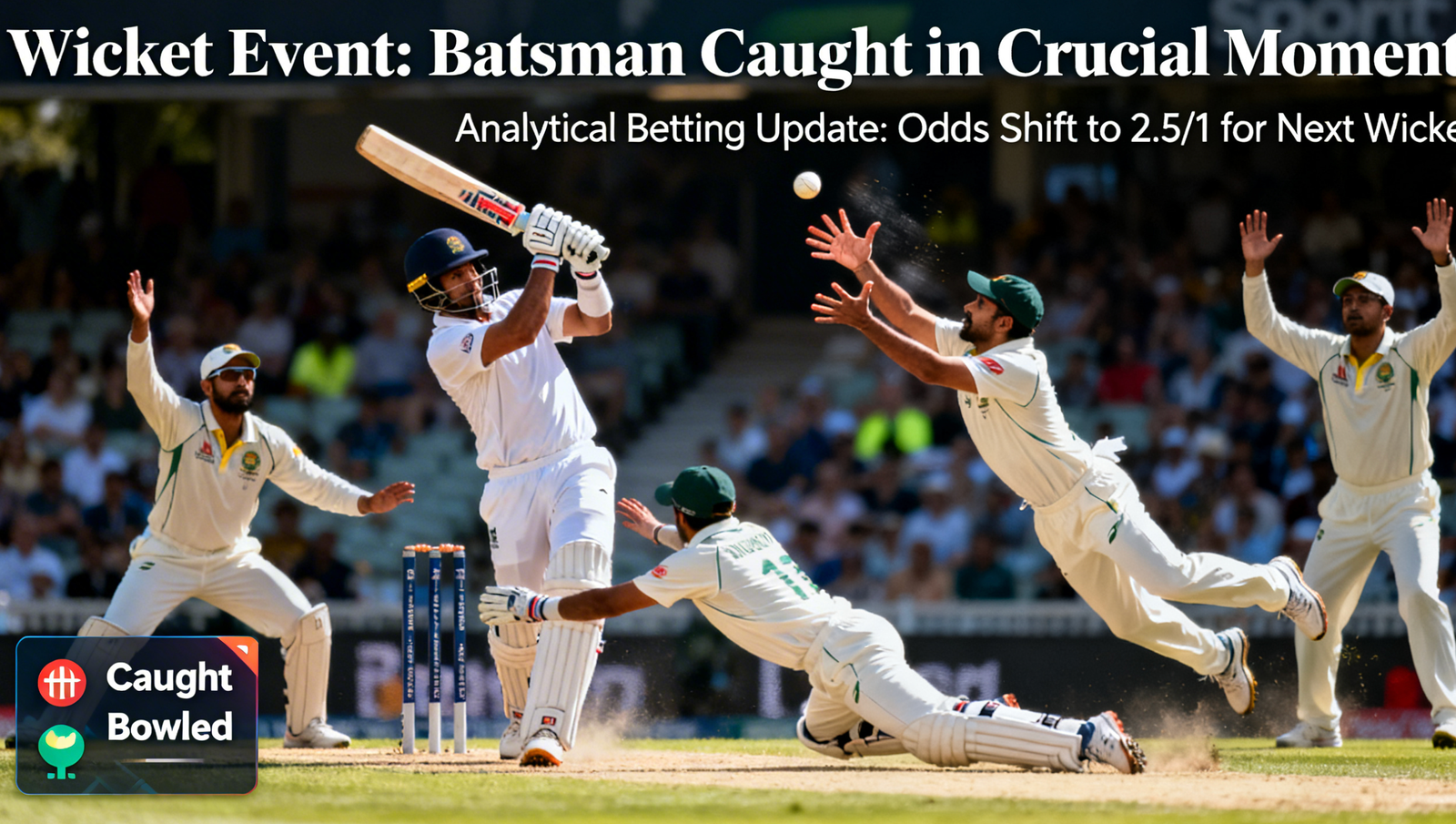
Of all the individual event markets in cricket betting, the next wicket method market is the most granular and the most analytically rich. It asks one specific question: when the next wicket falls, how will the batter be dismissed? Caught? LBW? Bowled? Run out? Stumped? Hit wicket? The answer is not random — it is a function of the specific batter at the crease, the specific bowler bowling, the fielding positions set, the match situation, the pitch surface, and the phase of play. Every one of these variables is observable before the dismissal occurs. Bettors who systematically analyse these inputs before the next ball is bowled have a measurable analytical edge over the bookmaker’s generic market pricing.
Next Wicket Method Market Overview
The next wicket method market is offered live on every ball of professional T20 and ODI cricket by major sportsbooks. It is a single-event prop: the next wicket to fall will be dismissed by a specific method. The market does not specify when the wicket falls — only the method when it does.
Standard market options and historical frequency distributions:
| Dismissal method | Test cricket % | ODI cricket % | T20I cricket % |
| Caught | 56% | 52% | 48% |
| LBW | 19% | 14% | 10% |
| Bowled | 14% | 16% | 18% |
| Run out | 5% | 9% | 13% |
| Stumped | 4% | 7% | 8% |
| Other | 2% | 2% | 3% |
These percentages are the global baseline. The actual probability for any specific next wicket varies significantly from these averages based on the five matchup variables outlined above. The market’s analytical value comes from identifying when the bookmaker’s pricing diverges from the contextually adjusted probability.
Types Of Wicket Dismissal Betting Options
Caught: The most frequent dismissal type in all formats. Subcategories include caught behind (edge to wicketkeeper), caught in the infield (mis-hit to a close fielder), and caught in the outfield (aerial shot to a boundary fielder). Each sub-type has distinct analytical drivers that a precise bettor can assess.
LBW: Second most common in Tests, less frequent in T20s. LBW probability is highest when a batter’s technique involves playing across the line, when the bowler is generating significant movement back into the right-hander (inswing or offspin), and when the umpire’s strike rate favours the bowling team. Jasprit Bumrah’s LBW rate against right-handers is among the highest of any current bowler — his seam position creates the angled delivery that traps right-handers on the crease with the ball nipping back.
Bowled: Most common when batters attempt attacking shots against balls that deviate from the expected line. Leg-breaks (Rashid Khan, Yuzvendra Chahal) and left-arm wrist spin (Kuldeep Yadav’s googly) produce bowled dismissals through the “gate” between bat and pad at a higher rate than any other bowling type.
Run out: Most frequent in T20Is — batting aggression, tight singles, and pressure from fielding sides combine to produce run outs in approximately 13% of T20I dismissals. The highest run out probability scenarios: during power surges between overs 15–20 when batters are taking aggressive singles, after a boundary when the non-striker has run on instinct, or when a batter with a known poor running record is at the crease.
Stumped: Highest probability when a specialist wrist spinner is bowling to an aggressive batter who leaves the crease to attack — specifically, when a right-hand batter charges a left-arm wrist spinner (Kuldeep Yadav) on a turning surface and fails to reach the pitch of the ball. Stumped rates in Test cricket in Asia are significantly higher than the global average.
Key Factors Influencing Wicket Methods
Bowler type vs batter’s dismissal pattern:
Every professional batter has a documented dismissal pattern across their career. Virat Kohli’s most common T20I dismissal is caught — specifically caught behind or in the covers attempting his signature drive through the off side. His LBW rate is lower than average because he plays with a high backlift and is not a natural “pad-first” batter. Rohit Sharma’s most common ODI dismissal is caught behind or caught at mid-on — his pull shot and flick through the leg side create specific caught opportunities in the deep.
For the next wicket method market, the batter at the crease and the bowler bowling are the two highest-priority inputs. A wrist spinner bowling to an aggressive batter on a turning surface creates a distinct distribution: caught (50%), bowled (20%), stumped (15%), LBW (10%), other (5%). A pace bowler with late swing bowling to a technically sound opener creates a completely different distribution.
Pitch surface and movement:
On seaming or swinging surfaces (Headingley, Wanderers), caught-behind probability rises significantly above the global baseline. The ball’s lateral movement produces edges to the wicketkeeper or slip cordon — the most common caught sub-type in English and South African conditions. On slow, turning surfaces (Chepauk, Galle), LBW and stumped probabilities rise as batters are challenged by deliveries that grip and turn rather than swing. On flat batting surfaces (Wankhede, Chinnaswamy), caught in the deep rises as batters attack aerial shots that find boundary fielders.
Phase of play:
In T20Is, the dismissal distribution shifts clearly across the three phases:
– Powerplay (overs 1–6): Caught behind highest (new ball, swing, edges); LBW elevated (batters hurrying, front-foot play); run out lowest (conservative running in early overs)
– Middle overs (7–15): Bowled rises (batters attempt unorthodox shots against spin); stumped rises (batters leave the crease against spin); run out moderate
– Death overs (16–20): Caught in the deep highest of the innings (aggressive aerial shots finding boundary fielders); run out highest (tight singles, panic running under pressure); LBW lowest (batters not worried about playing across the line)
Match situation and pressure:
Under high pressure (chasing 30+ off 3 overs), run out probability rises sharply. Panic running, calling for a second run on misfields, backing up too far — these behaviours all increase under scoreboard pressure. The IPL 2025 season confirmed this: run outs in the final two overs of 35+ required chases occurred at 2.3x the rate of run outs in matches with straightforward chases.
Next Wicket Betting Strategies
Caught betting — the three highest-value scenarios:
Scenario A — Pace bowler with swing vs tail-ender: Tail-enders (positions 8–11) are dismissed caught behind or at slip off pace bowling at approximately 70% frequency in Test cricket — nearly double the all-batters average. When a quality pace bowler with the new ball (or reverse swing) is bowling against the tail, the caught market becomes a near-binary bet. Jasprit Bumrah vs opposing lower-order batters on bouncy surfaces: caught probability is typically 65–70% vs the market’s 50–55% pricing.
Scenario B — Off-spinner vs left-hander going aerial: Ravichandran Ashwin bowling to a left-hand aggressive batter on a slow surface: the batter typically attempts the aerial off-side shot — top-edging to mid-off or mistiming to deep cover. In Ashwin’s career T20I matches, his most frequent wicket type against left-handers is caught — approximately 60% of dismissals. When the batting situation demands acceleration against off-spin, that frequency rises.
Scenario C — Death-overs caught in the deep: In T20I overs 17–20, a batting team needing 12+ per over produces caught in the deep at approximately 55% of dismissals — because aerial shots are the only scoring option. When a team needs 60+ off 5 overs, the next wicket caught probability (especially in the deep) rises significantly above the market’s standard pricing.
LBW betting — the two highest-value scenarios:
Scenario A — Jasprit Bumrah vs right-handed aggressive openers: Bumrah’s seam position generates the ball that angles in from the crease then straightens — the classic LBW delivery. His LBW rate against right-hand batters who play on the front foot is approximately 25% of all dismissals, significantly above the T20I average of 10%. When he is bowling against a right-hand opener in the powerplay on a surface with minimal bounce, the LBW market at odds of 4.00+ (25% implied) represents market mispricing vs Bumrah’s actual rate.
Scenario B — Left-arm orthodox spin (Jadeja/Axar) on turning subcontinental surface vs right-hander: Left-arm spin into the right-hander’s pads on a turning Chepauk or Ahmedabad surface generates LBW at 18–22% frequency — nearly double the global average. Ravindra Jadeja’s career LBW rate in India vs right-hand middle-order batters is 21%. Any market pricing LBW at 8.00+ (12.5% implied) when Jadeja is bowling on a turning home surface against a right-hander is structurally underpriced.
Situations Favoring Run Out Or Bowled
Run out — the four highest-probability scenarios:
- Death overs in T20Is, team needs 10+ per over: Run out probability rises to 15–18% in this specific pressure scenario
- Match of highest stakes, fielding team known for run-out excellence: India and South Africa are statistically the two best run-out fielding teams of the last five years — their fielding drills specifically target the throw-down line
- Batter with a documented history of poor running: Call-and-go misunderstandings between specific batting pairs are documented in career stats — certain batting pairs produce run outs at double the average rate
- Fielder in the run-out position (mid-wicket, cover) is a known throwing excellence player: Virat Kohli, Ravindra Jadeja, Mitchell Starc — direct-hit run-out specialists whose mere positioning at a specific fielding position raises run-out probability for that fielder’s position
Bowled — the two highest-probability scenarios:
- Rashid Khan bowling the wrong’un to a right-hander who sweeps: The bowled-through-the-gate dismissal is Rashid’s signature — his googly turns away from the right-hander rather than toward them, passing through the gap between bat and pad when the batter plays for the standard leg-break. His bowled rate is 28% of all T20 wickets — among the highest for any spinner globally.
- Reverse swing with the old ball vs a batter looking for pace: In ODI overs 35–50 with the old ball reversing, pace bowlers (Bumrah, Shaheen Afridi) who can produce late inswing to a right-hander create bowled dismissals when the batter plays outside the line. The ball reverses after the batter’s bat has committed to the off side.
Best Situations For Next Wicket Bets
Three specific match scenarios produce the highest analytical accuracy in next wicket method markets:
Quality wrist spinner bowling to an aggressive batter in the 8th–12th over on a turning surface: Stumped + Bowled combined probability is approximately 30–35% in this scenario vs the market’s 18–22% pricing. The value is in the stumped/bowled options — the batter must play aggressively but the turning, dipping delivery creates genuine quality chances.
Pace bowler with reverse swing in overs 40–50 (ODI) against a tail-ender: Caught + Bowled combined probability approaches 85% in this scenario. The caught option (especially caught behind) is the primary market — tail-enders’ technique cannot handle pace reverse swing, and the edge to the keeper is the most common result.
Death over aerial batting in a high-pressure T20I chase: Caught in the deep + Run out combined probability is approximately 70% in overs 18–20 when the batting team needs 15+ per over. These two methods dominate — aerial shots to boundary fielders and desperate running under pressure. Any other method (LBW, bowled, stumped) is structurally underpriced by the market in this scenario.
Conclusion: Improving Accuracy In Wicket Method Bets
The next wicket method market’s accuracy improvement framework comes down to five analytical steps:
- Identify the batter’s career dismissal distribution — what percentage of their career wickets were caught, LBW, bowled? Apply their specific ratio to the market’s generic pricing
- Identify the bowler’s career dismissal type — Bumrah produces LBW at 25% vs average 10%; Rashid produces bowled at 28% vs average 18%. Match the bowler’s output to the batter’s vulnerability
- Apply the phase of play modifier — powerplay favours caught behind; middle overs favour bowled/stumped; death overs favour caught in the deep + run out
- Apply the surface modifier — seaming surface raises caught; turning surface raises stumped/LBW; flat surface raises caught in the deep
- Apply the match situation pressure modifier — high-pressure chases raise run out + caught in the deep; low-pressure batting raises LBW + caught behind (more careful, deliberate batting)
Stakes for next wicket method bets should be small — 0.5–1% of bankroll per bet — because the market settles on individual deliveries and variance is high. But the analytical edge for a prepared bettor who applies these five steps consistently is the most structurally repeatable edge available in cricket’s live betting ecosystem.