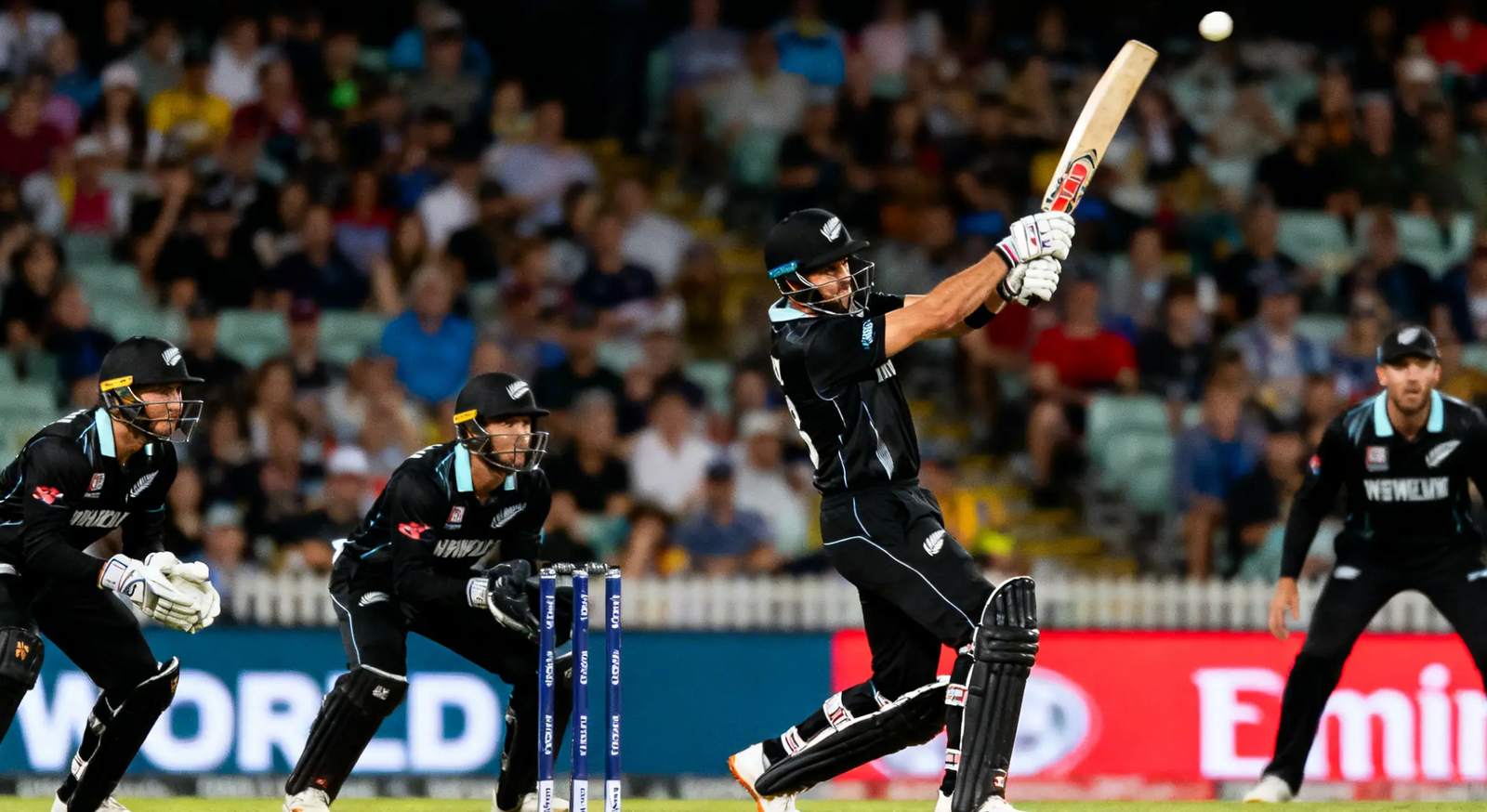
New Zealand arrived at the T20 World Cup 2026 without Michael Bracewell — their most reliable all-rounder in subcontinental conditions — who was ruled out without playing a match due to injury. Several other players were battling fitness concerns at the tournament’s start. They were placed in Group D alongside South Africa, Afghanistan, Canada, and UAE, with all their group matches split between venues in India and Sri Lanka. Despite the disruption, they qualified for the Super Eight with three impressive chases and only one defeat — a group-stage stumble against South Africa that ultimately meant nothing for their campaign. They reached the final, where India’s 255/5 ended their dream. The analytical lessons from New Zealand’s group stage campaign are among the richest in the tournament’s betting data — a team that consistently produced results as underdogs, then delivered one of the great semi-final upsets against South Africa.
New Zealand Group Stage Performance Overview
New Zealand were placed in Group D of the T20 WC 2026. Their four group stage matches produced three wins and one defeat, with their qualification for the Super Eight confirmed by their dominant 8-wicket win against Canada in Chennai — their final group match.
Full Group D table and NZ group stage matches:
| Opponent | Venue | Result | Key performance |
| Afghanistan | Sri Lanka | NZ won | Seifert 65*, Phillips 42; Henry-led bowling |
| UAE | Sri Lanka | NZ won | Comfortable chase |
| South Africa | India | NZ lost | — |
| Canada | Chennai | NZ won (8 wkts) | Ravindra 59, Phillips 76* — 146-run unbroken stand |
New Zealand progressed comfortably to the Super Eight stage after three impressive chases and only one defeat in the group stage.
Group D final standings: South Africa and New Zealand qualified for the Super Eight. Afghanistan, UAE, and Canada were eliminated.
Key Factors Before The Series Begins
Three structural factors shaped New Zealand’s tournament from before the first ball:
- Bracewell’s absence — and McConchie’s unexpected replacement impact: Several players were battling injury and illness; Michael Bracewell, a key all-rounder in subcontinental conditions, was then ruled out without playing a game. But they have won four out of five completed games with Bracewell’s replacement, the unheralded Cole McConchie, one of stars of their come-from-behind campaign. McConchie’s two wickets in his opening over against South Africa in the semi-final were the match’s defining moment. For bettors, Bracewell’s absence was a publicly available pre-tournament injury signal — yet the replacement player delivered beyond any reasonable expectation.
- Group D’s specific matchup dynamics: New Zealand’s group featured South Africa (the tournament’s outstanding team through the group stage), Afghanistan (dangerous spin attack), Canada (improving associate nation), and UAE (lower-ranked). The pre-tournament group betting markets correctly identified SA and NZ as the two qualifiers, but the specific sequence of matches and venues created important betting windows within the group.
- NZ’s 2024 T20 WC disappointment as context: After a dip at the 2024 World Cup when they were edged out in the first group stage by Afghanistan, they look back to their best as a high-functioning tournament side that always makes the best of the resources available to them. The 2024 group-stage elimination against Afghanistan was the defining failure of their recent T20I history — and their 2026 response, reaching the final, confirmed the structural quality of this NZ generation when operating at full competitive intensity.
Key Factors Affecting New Zealand Results
The chasing template: All three of NZ’s group stage wins came while chasing. This is not coincidental — Mitchell Santner’s captaincy philosophy is built around bowling first, setting the contest up with wickets, and chasing with a batting lineup that is structurally comfortable with run-rate pressure. New Zealand began their campaign with a composed chase against Afghanistan after navigating a nervy start. The bowlers kept Afghanistan in check with regular breakthroughs. Matt Henry led the effort with disciplined spells, while Jacob Duffy, Lockie Ferguson and Rachin Ravindra chipped in with wickets despite proving slightly expensive. The chase started on a shaky note with New Zealand slipping to 14/2 early, but Tim Seifert steadied the innings with a well-compiled 65 off 42 balls. Glenn Phillips played the aggressor, striking a crucial 42 off 25 as the pair added 74 runs.
The Phillips-Ravindra combination: The Ravindra-Phillips partnership against Canada was the purest expression of NZ’s batting potential when both fire simultaneously. After early wickets in the powerplay, Rachin Ravindra (59 off 39) and Glenn Phillips (76 off 36) launched a devastating counter-attack. Their unbeaten 146-run partnership dismantled the Canadian bowling attack and sealed victory with nearly five overs to spare. For betting markets, this partnership’s output is the most reliable NZ batting prop — when both survive the powerplay, the probability of a comfortable NZ chase completion rises dramatically.
Seifert as the powerplay anchor: Tim Seifert’s tournament profile confirmed his status as NZ’s most consistent performer across the full campaign. Seifert finished with 326 runs in 9 matches at a strike rate of 166.32 — the highest runs tally of any wicketkeeper in the tournament and the fourth highest overall behind Samson (321), Markram (286) and Farhan (383). His 65* against Afghanistan stabilised a 14/2 chase. His 58 in the final confirmed he is NZ’s most reliable batting resource regardless of match context.
Group Stage Betting Strategies For New Zealand
Three specific match configurations produced the highest NZ win probability in group stage betting:
NZ vs Associate or lower-ranked teams (UAE, Canada) chasing: NZ’s chasing template is maximally effective against teams whose bowling cannot consistently create pressure in the middle overs. UAE and Canada lack the bowling depth to maintain economy below 8 RPO across overs 7–15 — exactly where Phillips and Ravindra do their most damage. NZ match winner as the heavy favourite (typically 1.20–1.40 against associates) is the baseline, but the more analytically precise bet is NZ to win by a margin of 5+ wickets. Their three group stage wins included an 8-wicket demolition of Canada — the most comfortable format for NZ’s batting depth to express itself without pressure.
NZ vs Afghanistan on flat or pace-friendly surface: Afghanistan’s spin attack — Rashid Khan, Mujeeb Ur Rahman — is most threatening on turning surfaces. On flat or pace-friendly surfaces in India, their spin loses effectiveness against NZ’s left-hand batting options (Seifert, Ravindra, Santner) who sweep and reverse-sweep with technical comfort. NZ’s bowling (Henry, Ferguson) is more effective against Afghanistan’s top order on pace-friendly surfaces than vice versa.
Evening matches in Colombo with dew: At R. Premadasa Stadium, Colombo, evening dew from approximately over 12 onwards reduces spin effectiveness and assists the chasing team’s batting. NZ’s chasing template benefits structurally from dew — their final Super Eight match (vs England in Colombo) confirmed this: they batted first, posted 159, and England chased successfully. But in group stage evening matches at Colombo where NZ chose to field first, dew consistently aided their chase.
Potential Risk Games In Group Stage
NZ vs South Africa: The pre-match odds for NZ vs SA in Group D correctly identified SA as heavy favourites. SA’s unbeaten run through the group stage, combined with their 76-run demolition of India, made them the tournament’s dominant team at that stage. NZ’s defeat to SA in the group stage was the structurally expected outcome — their specific matchup weakness (SA’s left-arm pace vs NZ’s top order) was identified pre-match and delivered.
Rain/weather risk in Sri Lanka: The drizzle that started at the toss only grew heavier and never quite relented — the Super Eight NZ vs Pakistan match was washed out entirely at Colombo. For NZ specifically, weather risk was concentrated in their Sri Lanka matches. The washout gave both teams one point each — a result that ultimately benefited NZ’s net run rate position.
Best Betting Angles For Group Matches
Situations With Value Odds
Four specific pre-match betting angles produced structural value across NZ’s group stage:
- Seifert top NZ batter (any match): 326 runs in 9 matches at SR 166.32 — his tournament-top-performer status was not predictable from pre-tournament odds (typically 5.00–7.00 for top NZ batter in tournament) given the competition from Phillips and Ravindra. But in individual match top-batter props, Seifert’s batting position (opening, most balls available) and his powerplay execution confirmed him as the structurally most reliable NZ batter selection.
- Ravindra top NZ bowler: 12 wickets in 9 matches — the most of any NZ bowler in the tournament. His left-arm spin on turning Colombo surfaces produced wickets at every stage — group stage, Super Eights, semi-final. Top NZ bowler props for Ravindra at 3.50–5.00 represented structural value in matches played at Colombo R. Premadasa.
- NZ to qualify from Group D: Pre-tournament odds of NZ qualifying from Group D (alongside SA) were approximately 1.30–1.45 — reflecting the expected SA-NZ top-two finish. The one variable that could have changed this: a NZ upset in both the SA match AND a strong Afghanistan performance in their remaining group games. Neither occurred. NZ qualification from Group D at 1.35–1.40 was fairly priced.
- Total match runs Under in NZ vs Afghanistan: The 14/2 NZ early wickets in the chase, combined with Afghanistan’s known spin-dominant bowling producing a modest total, made the NZ vs Afghanistan match total Under a structurally supported position. Bowling-dominant matches involving quality spin attacks (Rashid, Mujeeb) consistently produce lower-total outcomes than the pre-match line calibrated to all-conditions T20I averages.
Conclusion: Predicting New Zealand Group Stage Outcomes
New Zealand’s T20 WC 2026 group stage campaign confirmed five analytical principles that apply to every future NZ T20I group stage campaign:
- Back the chasing template. NZ win probability in matches where they field first and chase is structurally higher than their first-innings probability. Their group stage record (3 chases, 3 wins; 0 first-innings scores in won matches) is the tournament’s clearest expression of a team with a defined strategic identity.
- Ravindra-Phillips is the key batting partnership. When both survive the powerplay, NZ’s chase ceiling rises to any target below 200. Their 146-run unbeaten partnership against Canada at Chennai confirms the ceiling — any NZ match where both are 0+ at the end of the powerplay shifts NZ’s live match winner probability sharply upward.
- Seifert is the most reliable individual NZ bet. His 326 tournament runs at 166.32 were built on consistent execution, not one exceptional performance. His opening position (most balls available) and powerplay comfort make him the highest-frequency NZ performance prop in any individual betting market.
- McConchie’s value was invisible before the tournament. Bracewell’s replacement produced match-defining performances in the semi-final (2 wickets in his opening over against SA). For future NZ tournaments, track squad replacements — underheralded players who fit specific match conditions can produce outsized returns in individual performance markets at long pre-tournament odds.
- Weather risk concentrates in Sri Lanka. NZ’s Colombo matches carried consistent weather disruption probability — confirmed by the Pakistan washout. In future ICC tournaments co-hosted by Sri Lanka, factor rain abandonment probability into NZ group stage betting: a 10–15% chance of washout at Colombo evening matches shifts the expected value of result-dependent bets toward the No Result market.